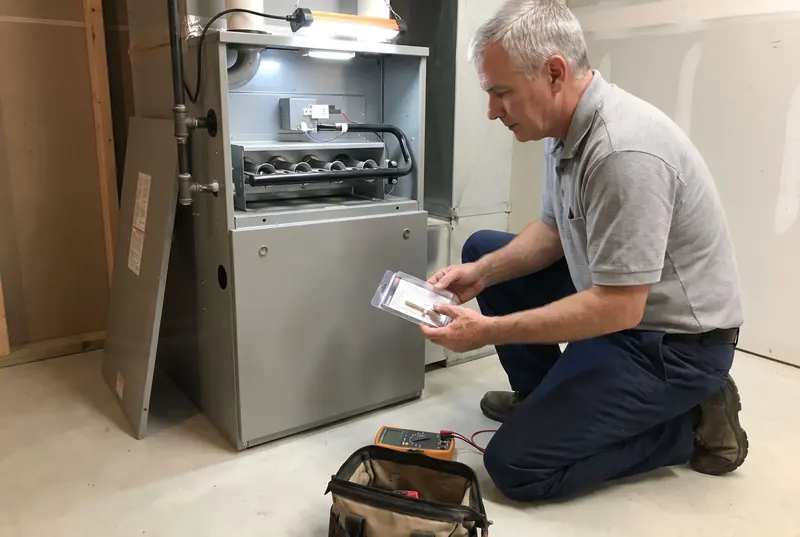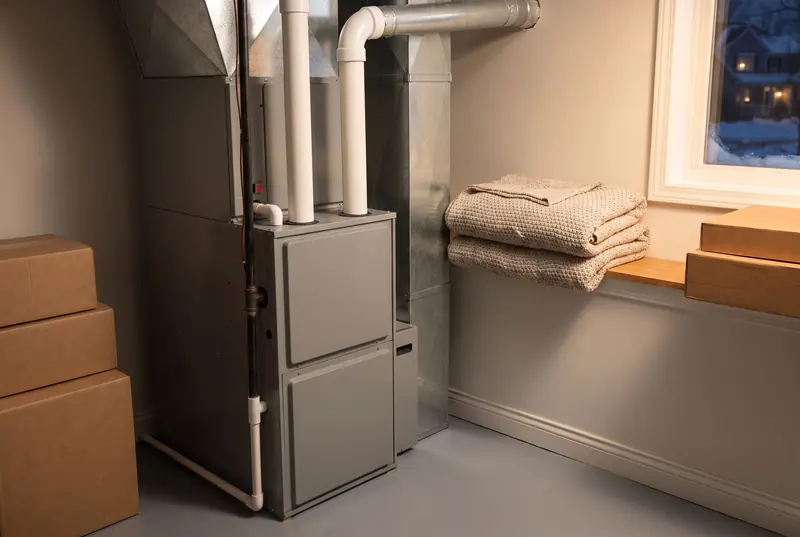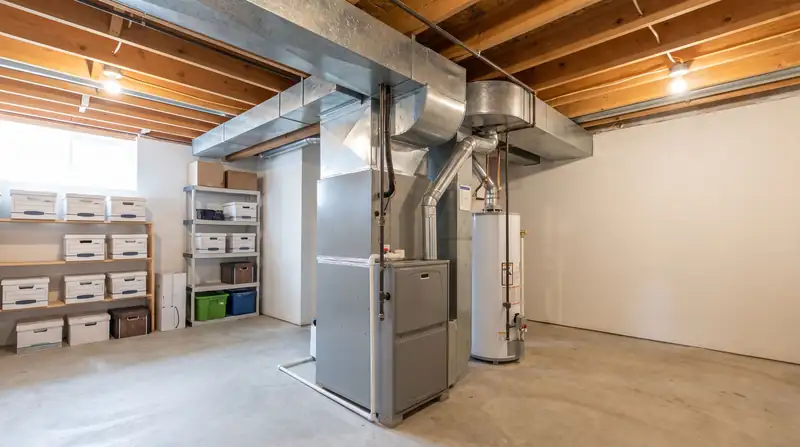

From the hallway, a furnace that will not heat looks the same no matter what broke. Inside the cabinet, though, everything happens in a strict order: inducer on, pressure switch closed, igniter glowing, gas valve open, burners lit, flame proven, and finally the blower moving heat through the ducts. Diagnosis is mostly a matter of finding where that chain breaks. In Maple Grove homes, it tends to be the same handful of culprits: a flame sensor coated in oxide, a hot surface igniter cracked by thermal cycling, a pressure switch held open by a tired inducer or a plugged condensate trap, or a control board with a burned relay.
When the AC quits in summer, see AC Repair.
Warning Signs for Furnace Repair
Spotting the early warning signs lets you act before the problem gets expensive. Keep an eye out for the following clues:
- Grinding or high-pitched squeals from the blower
- Clicking and a glowing igniter with no burner flame
- Air moving through the vents that never gets warm
- Loud booms at startup caused by delayed ignition
- A pilot or burner flame that is lazy yellow instead of crisp blue
- Short cycling every few minutes without reaching the setpoint
- Rust streaks, soot, or water around the cabinet or flue
- Burners light, run a few seconds, then shut down repeatedly
Early Action Saves Money
Most HVAC failures start small, a weak capacitor, a squealing blower, a system that runs a little longer each week. At the first hint of a problem, call (763) 247-5166 for a fast inspection.